
Contents Overview
Beautifully Crafted Tributes as Unique as the Life They Celebrate.
Contact us by phone, email, or through our website to discuss your personalised funeral stationery.
Introduction
The Order of Service for funerals is a central component of memorial services, providing structure and guiding attendees through the ceremony. This document, which serves both practical and symbolic purposes, has evolved significantly over time. From its early origins to modern innovations, the Order of Service reflects changes in funeral practices, technological advancements, and cultural shifts. In this detailed exploration, we trace the history of the Order of Service for funerals and examine how it has developed into the personalised and meaningful booklet it is today.
Origins of the Order of Service for Funerals
The concept of an organised service to commemorate the deceased has ancient roots. Early funerary practices across various cultures included structured rites and rituals that guided participants through the service. These early ceremonies were often guided by religious or cultural customs rather than written documents, but they laid the groundwork for what would become the modern Order of Service.
1. Ancient and Medieval Practices
In ancient civilisations such as Egypt, Greece, and Rome, funerals were elaborate events with prescribed rituals. In Egypt, for example, elaborate ceremonies were conducted to ensure the deceased’s safe passage to the afterlife, involving specific rites performed by priests. Similarly, ancient Greeks and Romans followed detailed funeral customs, though these were typically oral rather than written.
During the medieval period in Europe, Christian funerals were marked by a structured liturgy that outlined prayers, hymns, and rites performed by the clergy. These liturgies were often recorded in ecclesiastical books, which served as a guide for the clergy rather than for the congregation. The focus was on the spiritual and ritualistic aspects of the service rather than providing a guide for attendees.
2. The Early Printed Orders of Service
The advent of the printing press in the 15th century brought significant changes to the production of written materials, including funeral services. The Reformation and the rise of Protestant denominations led to a greater emphasis on making religious texts accessible to the laity. Early printed Orders of Service began to appear in the 16th and 17th centuries, primarily in the context of Christian services. These documents included the essential elements of the service but were often standardised and not personalised.
The Rise of Personalisation in Funeral Orders
1. 18th and 19th Centuries
As printing technology advanced, the 18th and 19th centuries saw the beginning of greater personalisation in funeral Orders of Service. With improvements in lithography and printing techniques, families started to include more details about the deceased and their preferences. This period marked a shift from generic, uniform services to those that reflected the individual’s life and character.
Funeral programmes of this era began to feature personal elements such as favourite hymns, selected readings, and brief biographical details about the deceased. The increased use of printed materials allowed families to create more bespoke services, tailored to the deceased’s personal and familial preferences.
2. Early 20th Century Developments
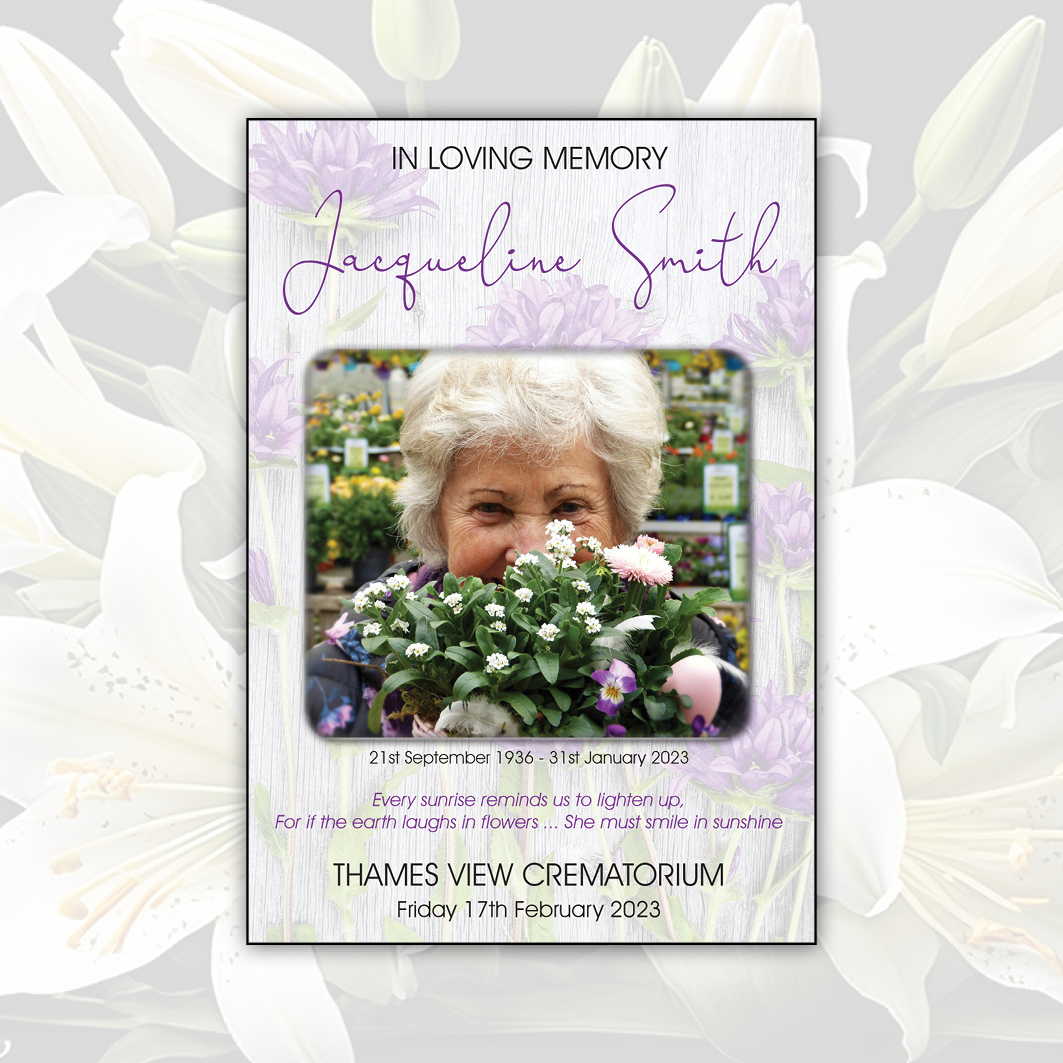
The early 20th century saw further innovations in the design and content of Orders of Service. With the introduction of more advanced printing technologies, it became possible to produce Orders of Service that were not only functional but also aesthetically pleasing. This period saw the inclusion of photographs, personalised covers, and custom-designed layouts, reflecting a growing desire to honour the deceased in a more individualised manner.
The Modern Era of Funeral Orders
1. Late 20th Century to Early 21st Century
The late 20th and early 21st centuries marked a significant transformation in the production and design of funeral Orders of Service. Digital printing and design technologies revolutionised the field, allowing for unprecedented levels of customisation and personalisation. Families could now incorporate a wide range of elements, from high-quality photographs and bespoke graphics to unique paper types and finishes.
This era also saw the rise of professional design services specialising in funeral stationery. These services offered families the opportunity to work with designers who could create highly personalised Orders of Service that reflected the deceased’s personality and the tone of the service.
2. Digital Orders of Service
In recent years, digital technology has further transformed the Order of Service. Digital Orders of Service have become increasingly popular, offering several advantages over traditional printed versions. These digital formats can be easily shared with remote or international attendees, and they can incorporate multimedia elements such as videos, audio recordings, and interactive features.
Digital Orders of Service also provide flexibility in terms of design and distribution. Families can update and distribute the document quickly, and it can be archived online for future reference. This format also aligns with growing trends towards sustainability, as it reduces the need for printed materials.
Eco-Friendly Innovations
1. Sustainable Materials
With increasing awareness of environmental issues, there has been a growing demand for eco-friendly options in funeral Orders of Service. Many families and funeral service providers now opt for sustainable materials, such as recycled paper, biodegradable inks, and eco-friendly printing processes. These choices reflect a broader commitment to environmental stewardship and a desire to minimise the ecological impact of funeral services.
2. Digital Alternatives
The rise of digital Orders of Service also supports eco-friendly practices by reducing the reliance on physical materials. This digital approach not only conserves resources but also offers a more dynamic and interactive experience for attendees.
The Role of the Order of Service Today
1. A Guide for Attendees
Today, the Order of Service remains a crucial element of funeral services, providing structure and guidance for attendees. It helps guests understand the flow of the ceremony, including the order of hymns, readings, and special tributes. This clarity is especially important in complex or non-traditional services, where the structure may not be immediately familiar to all attendees.
2. A Personal Keepsake
Beyond its functional role, the Order of Service serves as a cherished keepsake for those who attend the service. It captures the essence of the ceremony and provides a tangible reminder of the deceased. Many families keep these documents as mementoes, which can be particularly comforting in the grieving process.
3. A Reflection of Personal and Cultural Values
The Order of Service is also a reflection of personal and cultural values. It allows families to incorporate elements that honour the deceased’s life, beliefs, and traditions. Whether through custom designs, personalised tributes, or specific religious or cultural rites, the Order of Service offers a way to create a meaningful and respectful tribute.
Conclusion
The Order of Service for funerals has evolved significantly from its early origins to the highly personalised and diverse documents we see today. Its history reflects broader changes in technology, societal attitudes, and funeral practices. From medieval liturgies to modern digital formats, the Order of Service has adapted to meet the needs of families and honour the lives of those who have passed away.
As we look to the future, the Order of Service will likely continue to evolve, incorporating new technologies and responding to changing cultural trends. However, its core purpose remains the same: to provide a respectful and meaningful guide for one of life’s most profound moments. Whether traditional or modern, printed or digital, the Order of Service remains an essential part of the funeral experience, offering structure, comfort, and a lasting tribute to a loved one’s life.


